Ask someone shopping for a condo in Downtown Boise what will decide whether their loan gets approved, and most will describe their own file: credit score, down payment, debt-to-income ratio. Two days ago, that assumption became incomplete. Since August 3, 2026, conventional lenders backing loans through Fannie Mae and Freddie Mac have been required to dig into the finances of the condo building itself, not just the buyer, before nearly every purchase can close.
For a downtown condo market built across six decades, from a 1964 mid-rise still holding its original bones to a six-story building completed in 2007, that rule change does not land evenly. It lands hardest exactly where Idaho law offers the least protection: buildings whose boards have never been required to prove they can pay for a new roof, elevator, or boiler.
What Actually Changed on August 3
For years, a buyer putting down 10 percent or more on a primary residence condo could qualify through what lenders call Limited Review, a shortcut that skipped a deep look at the association's budget, reserves, and delinquency rate. Second-home and investment buyers needed 25 percent down for that same shortcut. As of loan applications dated August 3, 2026 or later, the shortcut is gone. Nearly every established condo project now goes through Full Review, meaning the lender pulls the HOA's budget, reserve funding, delinquency rate, insurance coverage, and any pending litigation before your loan moves forward, no matter how much you put down.
That is not a paperwork inconvenience. It is a new point where a deal can stall or die, and it now applies to buildings that used to sail through underwriting because the buyer's financials looked strong enough to skip the association review entirely.
The Number That Takes Effect in January
A second deadline sits five months out. Starting with loan applications dated January 4, 2027, Fannie Mae requires condo associations to budget at least 15 percent of their annual assessment income toward reserves, up from the current 10 percent floor. An association can also qualify by following a reserve study's highest recommended funding level, if that study is less than three years old.
The math is easy to see once it is laid out. An association collecting $1,000,000 a year in dues currently needs to show $100,000 earmarked for reserves. Starting in January, that line needs to read $150,000. Buildings sitting right at the old 10 percent floor have five months to raise dues, cut other spending, or risk losing the conventional financing that most of their future buyers will need.
A non-warrantable condo is a building where Fannie Mae and Freddie Mac loans are simply not available. Buyers get pushed into portfolio or non-QM financing instead, which usually means a higher rate, a bigger down payment, and a smaller pool of people who can afford to buy into that building.
Why This Lands Differently in Downtown Boise
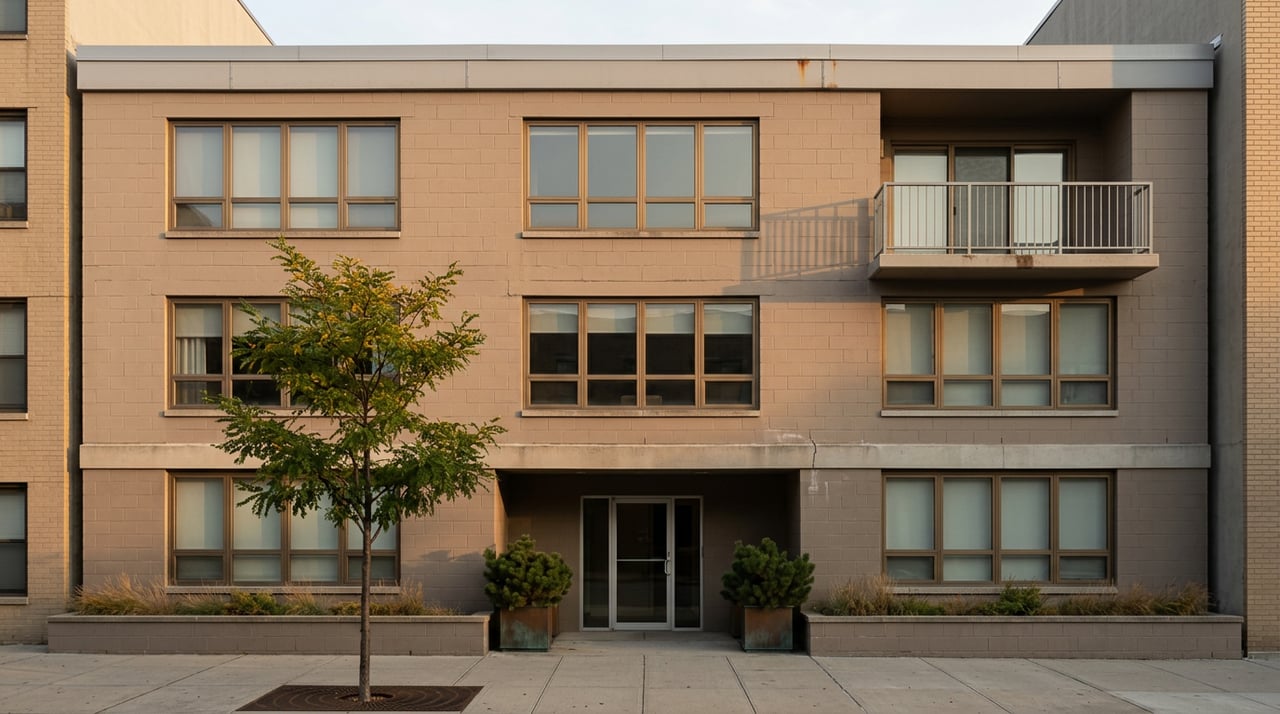
Downtown Boise is not one condo market. It is several, stacked by decade. Imperial Plaza, a 12-story mid-rise a few minutes' walk from C.W. Moore Park, was built in 1964 and still runs 65 units with monthly HOA fees in the $523 to $543 range. Royal Plaza Condominiums, six stories and 94 units on Main Street, went up in 2007. Tower Plaza sits two blocks from the State Capitol at Idaho Street and Capitol Boulevard, and One Nineteen and the Jefferson Building round out downtown's roster of established associations.
As of June 2026, the median home price across Downtown Boise sat at $644,000, and condos in the neighborhood spent an average of 57 days on the market before selling. That price tag tells you what a buyer is willing to pay. It tells you nothing about whether their lender will let the deal close, and that is the piece most people shopping downtown right now have not thought to ask about.
Here is the part that should give both buyers and sellers pause: nothing in Idaho law requires any of these associations to have run a reserve study to figure out where they land on that 15 percent line. The Idaho Condominium Property Act, found in Idaho Code Title 55, Chapter 15, governs how these associations form, elect boards, and handle common expenses, but it does not set a reserve funding formula or require a professional study at all. Thirteen other states, including Colorado, Florida, and Washington, mandate one. Idaho does not.
That gap used to be mostly theoretical. A board could go years without commissioning a reserve study and few buyers would ever think to ask. Full Review changes that math. A lender examining a building pushing past 60 years old for the first time has no reason to assume the work has already been done. If the budget does not show a defensible reserve line, and there is no recent study to point to instead, the building risks landing on the non-warrantable side, and every owner in it feels that in resale value. A six-story building from 2007 is not immune either. It has had almost two decades to underfund the same line item, just with less time for anyone to notice.
What to Ask Before You Waive a Financing Contingency
If you are under contract on a Downtown Boise condo right now, or about to be, these are the documents worth requesting before you remove any financing condition:
- The HOA's current operating budget, specifically the line showing what percentage of assessment income goes to reserves
- The most recent reserve study, if one exists, and how many years ago it was completed
- The association's delinquency rate. Fannie Mae disqualifies projects where more than 15 percent of units run 60 or more days past due on dues
- The master insurance policy's per-unit deductible. For loan applications dated on or after July 1, 2026, that deductible is capped at $50,000 for the building to stay eligible
- Whether the association has any pending litigation, particularly anything tied to structural repairs or safety
None of these documents require a lawyer to read. They require asking for them early enough that a problem surfaces before your inspection period closes, not during underwriting three weeks before your scheduled closing date.
If You Own in One of Downtown's Older Buildings
Idaho's lack of a reserve study mandate cuts both ways. It also means an association can choose to run one voluntarily, and in this financing environment, that choice is starting to look less optional. A board that commissions a current reserve study and funds toward its recommended level walks into a buyer's Full Review with an answer instead of a question mark. A board that does not is betting that every future buyer either pays cash or qualifies for non-warrantable financing at a higher rate and a larger down payment, a bet that shrinks the pool of people who can afford to buy into that building.
If you sit on a board or own in one of downtown's established associations, the practical move mirrors what lenders are already doing: pull the current budget, calculate the actual reserve percentage, and compare it against 15 percent well before January. Waiting for a sale to fall through is the expensive way to find out where the building stands.
FAQ
Does this affect FHA or VA loans on Downtown Boise condos? No. These changes apply to conventional loans backed by Fannie Mae and Freddie Mac. FHA and VA maintain their own separate condo project approval standards.
Does a cash buyer need to worry about any of this? Not for financing approval, but a cash buyer inheriting a building with underfunded reserves still inherits the risk of a large special assessment down the road, and a thin reserve line can affect what the next buyer down the chain is able to pay for the unit.
What if the building's reserve study is old but shows a comfortable percentage? Fannie Mae generally wants a study completed or updated within the past three years to use its recommended funding level in place of the straight 15 percent budget line. An outdated study may not satisfy a lender even if its old numbers once looked fine.
Downtown Boise's next round of condo sales is going to be decided as much in HOA board meetings as in loan applications. If you are weighing a purchase in one of downtown's established buildings, or sitting on a board wondering where your reserves actually stand, Glenda Phua can help you read the numbers before they read you. Let's Connect.